Let G be a finite graph. We consider a random walk on the vertices of G of the following type. Start at a vertex $v$ .(v could be chosen randomly according to some probably distribution or could be specified in advance). Among all edges incident to v, choose one uniformly at random( i.e. if $d_G(v)=d$, each of these edges is chosen with probability 1/d)
Problem: determine the probability of being at a given vertex after a given number steps.
Let M(G) be the matrix whose rows and columns are indexed by vertices $v1,\dots,v_n$, we assume that $m{ij}$ is the $(i,j)$-entry of M(G), which satisfies the following formula
where $a{ij}$ is the number of edges between $v_i$ and $v_j$. The $m{ij}$ is probability that if one starts at $v_i$ and then the next step will be at $v_j$.
Recall: the number of k-walks from $v_i$ to $v_j$= the $(i,j)$-entry of $A(G)^k$$\exists vie_1v{i1}e_2v{i2}\cdots e_kv_j,\ P(v_ie_1v{i1}e_2v{i2}\cdots e_kv_j)=\frac{a{ii1}}{d_i}\frac{a{i1i_2}}{d{i1}}\cdots\frac{a{i{k-1}i_j}}{d{i{k-1}}}=m{ii1}m{i1i_2}\cdots m{i_{k-1}j}$
Assume the probability to pick $vi$ is $p(v_i)$ for $i\in{1,\dots,n}$ s.t. $\sum{i=1}^n p(v_i)=1$
Let $P=[\begin{matrix}p(v_1)&p(v_2)&\cdots&p(v_n)\end{matrix}]$. Then the probability of a walk ending up at $v_i$ in k steps is
If G is k regular ( every vertex has degree k) then $M(G)=\frac{1}{d}A(G)$
Then the eigenvalue $\beta_i$ of $M(G)$ satisfies $\beta_1=\frac{1}{d}\lambda_i$ where $\lambda_i$ is an eigenvalue of G.
Weighted graphs and digraphs
Let G be a graph. A weighted graph is a graph G associated with a weight function: $w:E(G)\to\mathbb{F}$ where $\mathbb{F}$ is a field, denote by $(G,w)$. Most of the time, we consider the case that $\mathbb{F}=\mathbb{R}$.
The adjacency matrix of a weighted graph is a real symmetric matrix $A(G,w)=(a{ij}){n\times n}$ with $a_{ij}=w(v_iv_j)$, the weight of the edge of $v_iv_j$.
Let H be a subgraph of $(G,w)$. The weight of H is defined as $w(H)=\sum_{e\in E(H)}w(e)$
For example, how to find a minimum weight path between two given vertices? How to find a minimum spanning tree or how to find a cycle or walk with large weight( so-called heavy cycles or walks)
A digraph is a graph with an orientation which assigns an orientation to each edge.
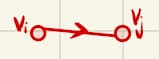
For a given graph G, let D be an orientation of G, $\vec{B}$ is an oriented incidence matrix
A solution to $\vec{B}\cdot \vec{f}=\vec{b}$ is called a network flow. $\vec{b}$ is called a boundary condition.
If $\vec{b}=\vec{0},\ \vec{B}\cdot \vec{f}=\vec{0}.\qquad(*)$
A vector $\vec{f}$ satisfies $(*)$ is called a circulation or real flow if $\vec{f}\in\mathbb{R}^{|E(G)|}$.
If a solution to $(*)$ satisfies $\vec{f}\in\mathbb{Z}^{|E(G)|}$, then $\vec{f}$ is called an integer flow.
Tutte's five-flow conjecture: For a graph without bridge, it has a nowhere zero 5-flow i.e. $\exists \vec{f}\in\mathbb{Z}^{|E(G)|}$ and every component of f is not zero and absolute value of every component is at most 4. $\vec{f}=[f_1, f_2,\cdots,f_m]$ where $m=|E(G)|,\ f_i\in\{-4,-3,-2,-1,0,1,2,3,4\}$Eigenvalues and subgraphs
Let G be a graph with n vertices, $A(G)$ be the adjacency matrix.
All n eigenvalues of $A(G)$ are real because $A(G)$ is real and symmertic
where $\lambda{\lceil \frac{n+1}{2}\rceil},\lambda{\lfloor \frac{n+1}{2}\rfloor}$ are median eigenvalues.
The largest eigenvalues $\lambda_1(G)$ is usually called the spectral radius of G.
Proposition. Let G be an n-vertex graph and A be its adjacency matrix.Let $\lambda1\geq\cdots\geq\lambda_n$ be the eigenvalues of A
Then 1. $\lambda_1 =\max{\vec{x}\not=\vec{0}}\frac{\vec{x}^TA\vec{x}}{\vec{x}^T\vec{x}}$, 2. $\lambda_1\geq|\lambda_n|$
Proof
1.The eigenvalues of A (say $\vec{u}_1,\vec{u}_2,\dots,\vec{u}_n$) can be chosen as a standard orthogonal basis of $\mathbb{R}^n$.
Assume that array ($x_1,x_2,\dots,x_n$) is the coordinate of $\vec{x}$ under this basis
with equality holds if and only if $x_1\not= 0$ and $x_i=0$ for $i={2,\cdots,n}$, i.e. $\vec{x}$ is exactly an eigenvector of $\lambda_1$.
Let $\vec{v}$ be get from $\vec{u}_n$ by convert each component into its absolute value (i.e. $\vec{v}=(|\vec{u}_n(1)|,|\vec{u}_n(2)|,\cdots,|\vec{u}_n(n)|)$)
From proof of 1. we can write $\lambda_n$ as
We have used triangle inequality at the first inequality and the result of 1. at the second inequality.
Propsition. Let G be a graph, and $\Delta (G)$ be the maximum degree and $d(G)$ be the average degree. Then we have
Proof
Note that, there exist $\vec{x}\not=\vec{0}$, s.t. $A\vec{x}=\lambda\vec{x}$ where A is the adjacency matrix.
Let $\vec{x}_1=\frac{1}{\sqrt{n}}[\begin{matrix}1&1&\dots&1\end{matrix}]^T$, then
For the upper bound, let $\vec{x}$ s.t. $A\vec{x}=\lambda_1\vec{x}$ where $\vec{x}=[\begin{matrix}x_1&x_2&\cdots&x_n\end{matrix}]^T$
Let $x_i$ be the largest value among all components of $\vec{x}$. Then,
So $\lambda_1\leq\Delta (G)$ follows.
Corollary Let G be a k-regular graph. Then $\lambda_1(G)=k$
A signed graph $(G,\sigma)$ is a weighted graph s.t. $\sigma:\ E(G)\to{-1,1}$
So $A(G,\sigma)$ is a symmetric real matrix.
We can assume that $\lambda_1(G,\sigma)\geq\lambda_2(G,\sigma)\geq\cdots\geq\lambda_n(G,\sigma)$, but $\lambda_1(G,\sigma)\geq|\lambda_n(G,\sigma)|$ may not hold.
Prop. Let $(G,\sigma)$ be a signed graph with maximum degree $\Delta (G)$. Then
Proof
Let $\vec{x}$ be an eigenvector of $\lambda$ s.t. $\lambda\vec{x}=A\vec{x}$.
Let $\vec{x}=[\begin{matrix}x_1&x_2&\cdots&x_n\end{matrix}]^T$ and $x_i$ has the largest absolute value among all $x_j$’s.
Then
So $|\lambda|\leq\Delta(G)$
Thm A graph G is bipartite $\Leftrightarrow$ its spectrum is symmetric about the origin.
(i.e. $\lambda_i$ is an eigenvalue of G $\Leftrightarrow$ $-\lambda_i$ is an eigenvalue of G)Proof
$\Rightarrow$ Assume that G is bipartite.Let A be The adjacency matrix of G.
Let $\lambda$ be an eigenvalue of G with $\vec{x}=(\begin{matrix}\vec{x}_1^T&\vec{x}_2^T\end{matrix})^T$
Then
Then
So $-\lambda$ is also an eigenvalue of A.
$\Leftarrow$ Let $\lambda1\geq\cdots\geq\lambda_n$ be all eigenvalues of G.(i.e. $\lambda_i=-\lambda{n-i+1}$)</font>
For any positive integer k, the matrix $A^k$ has eigenvalues $\lambda_1^k,\lambda_2^k,\cdots,\lambda_n^k$
Because G has symmetric specturm, it follows that $\lambda_1^k+\cdots+\lambda_n^k=0$ if k is an odd integer.
$w_k(G)$ is the total number of close k-walks.So every closed walk have an even length. Therefore G is bipartite.
Problem: characterize graphs which satisfy # positive eigenvalues=# negative eigenvalues